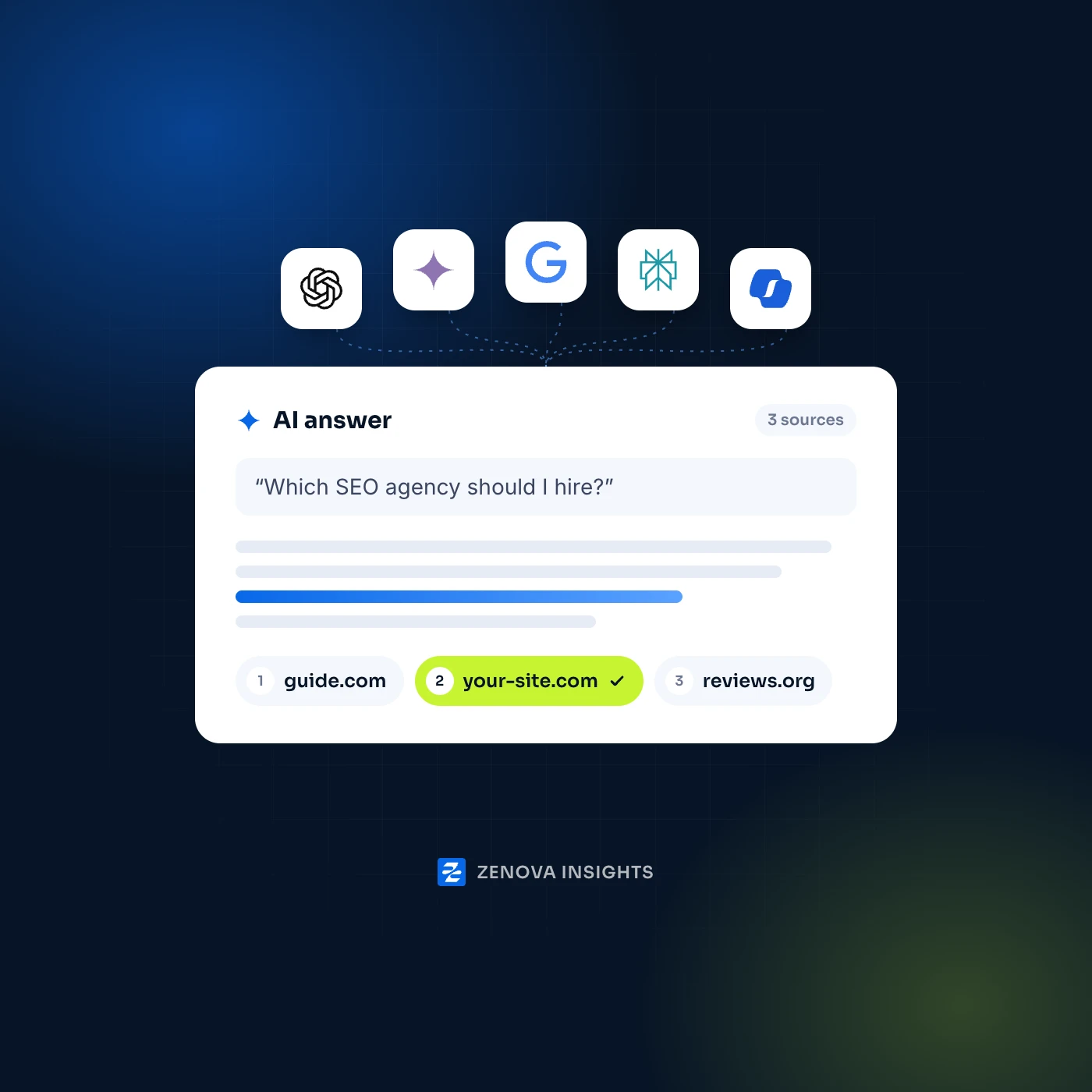

When someone asks ChatGPT or Google which agency, clinic or product to trust, the answer arrives with a handful of sources attached. Becoming one of those sources is the job of AI SEO services, which you will also hear called GEO (generative engine optimisation) or AEO (answer engine optimisation). This guide explains, in plain terms, how AI engines decide who to cite and what that means for your website.
Search is still the one channel where people tell you exactly what they want. The difference now is that a machine reads the results before your customer does.
How do AI engines decide which pages to cite?
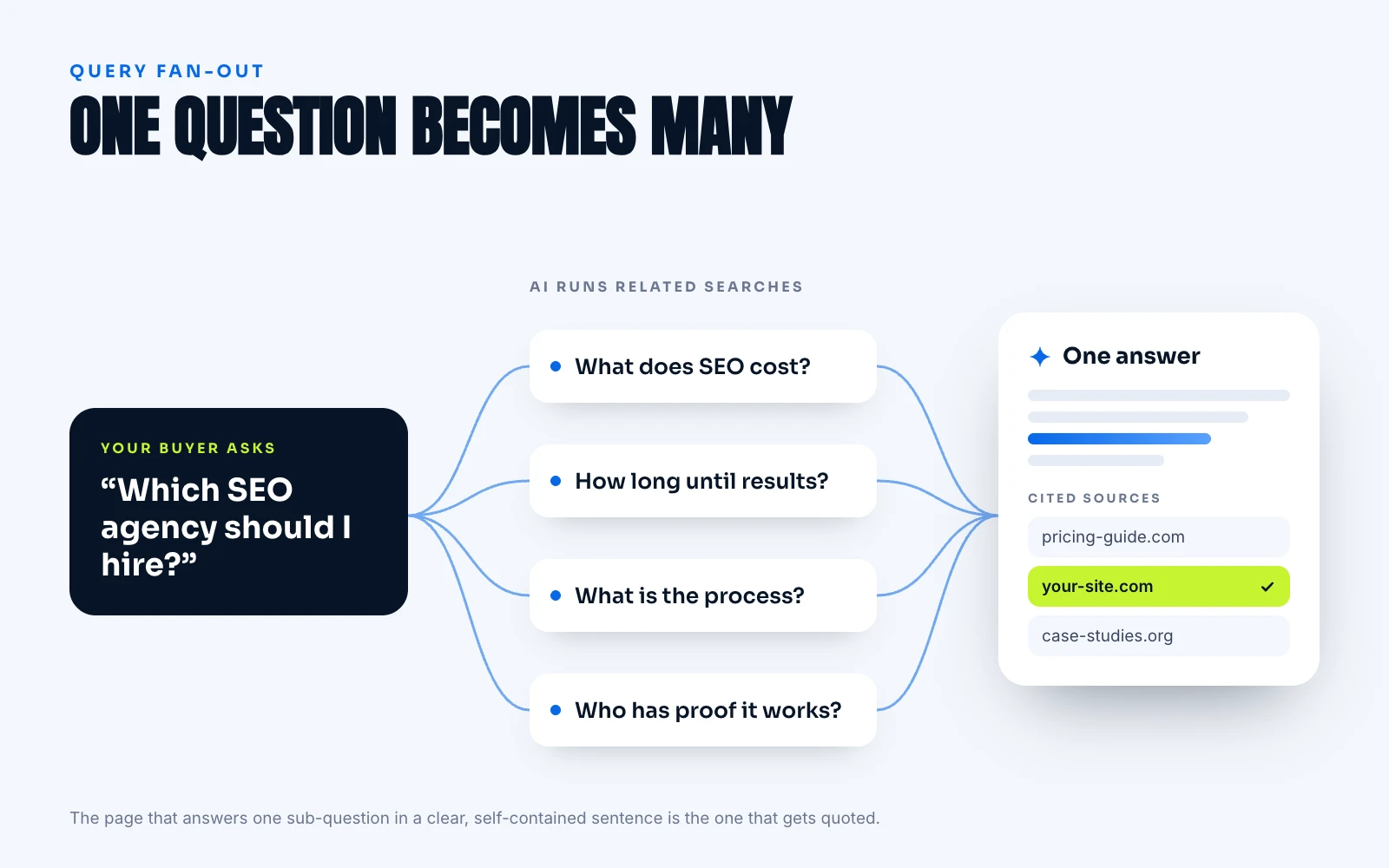
They search, they read, and they lift the passage that answers the question most clearly. Google says its AI Overviews and AI Mode may use a query fan-out technique, running several related searches across subtopics and then building one answer from what comes back.
So a single buyer question becomes many smaller ones. "Which SEO agency should I hire?" turns into separate questions about cost, timelines, process and proof. The page that answers one of those sub-questions in a clean, self-contained sentence is the page that gets quoted.
That has a practical consequence. A page that buries its answer under three paragraphs of introduction is harder to quote than a page that answers first and explains second. This guide is written that way on purpose.
Do you need special optimisation to appear in Google's AI Overviews?
No. Google states that there are no additional requirements to appear in AI Overviews or AI Mode, and that a page only needs to be indexed and eligible to show in Search with a snippet.
In other words, the foundations have not changed. A page that cannot be crawled, indexed or understood will not be cited, however good its content is. That is why we fix crawling, indexing and speed before writing a word.
Can ChatGPT and Perplexity actually read your website?
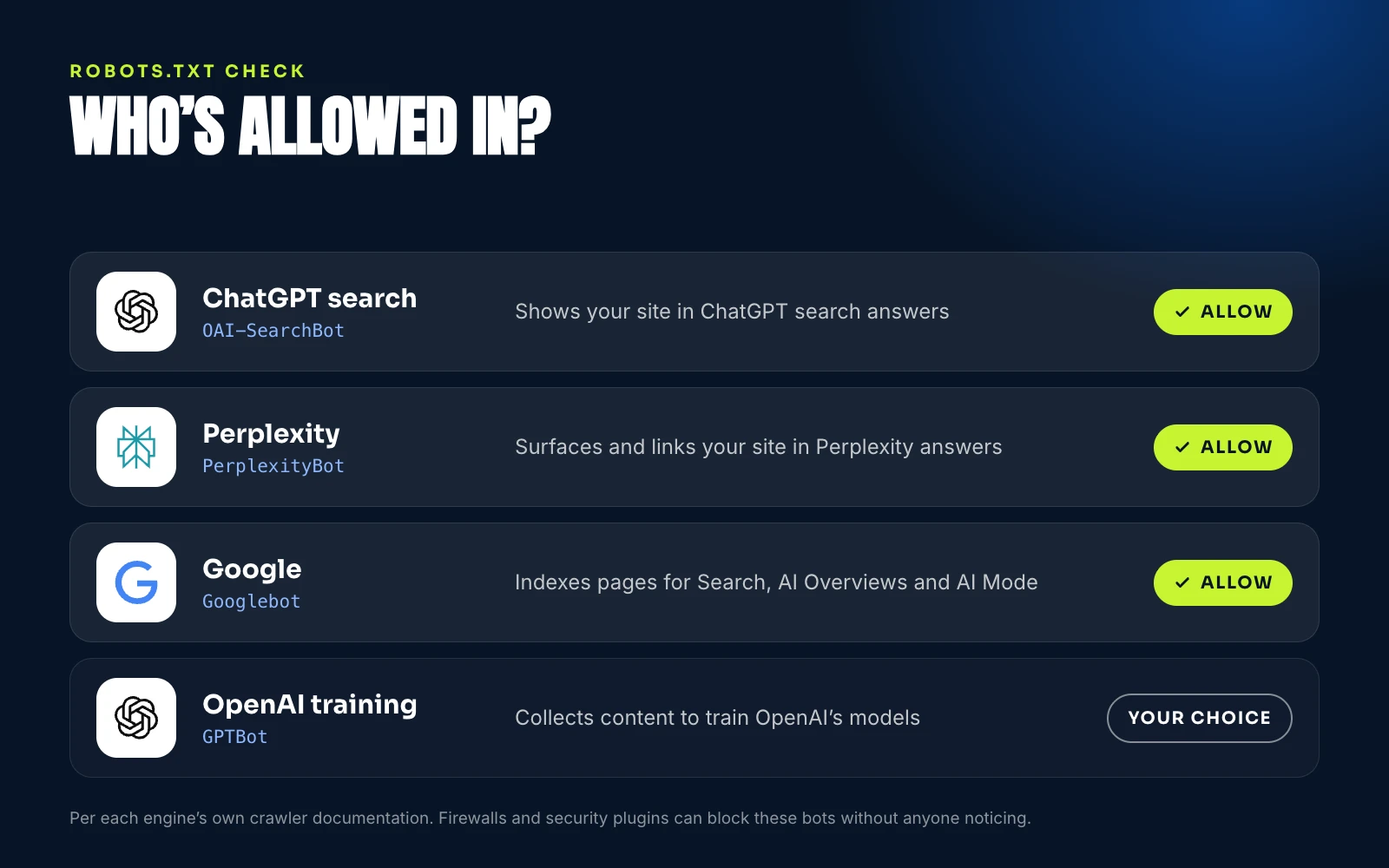
Only if you let their search crawlers in. OpenAI says sites that opt out of its OAI-SearchBot are not shown in ChatGPT search answers, and Perplexity recommends allowing PerplexityBot in your robots.txt if you want to appear in its results.
This is one of the first things worth checking, and one of the cheapest to fix. Security plugins and hosting firewalls can block unfamiliar bots without anyone noticing.
It also helps to know that the bots do different jobs. OpenAI separates OAI-SearchBot, which surfaces sites in ChatGPT search, from GPTBot, which collects content for model training. You can allow the first and block the second.
What is the difference between SEO, AEO and GEO?
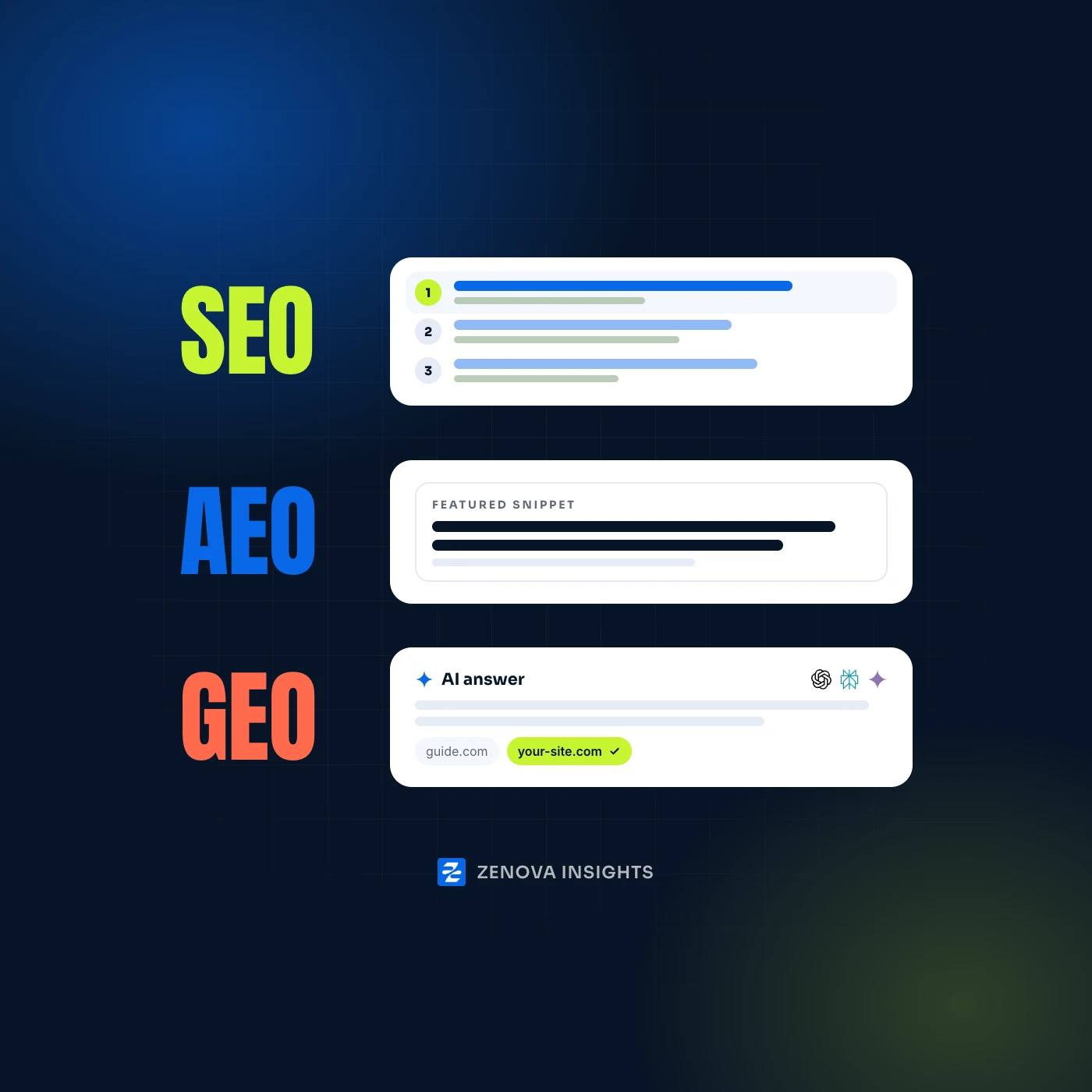
SEO earns a place in the ranked list of links. AEO and GEO earn a place inside the answer itself: AEO for direct answers such as featured snippets and AI Overviews, and GEO for the generated responses in tools like ChatGPT, Perplexity and Gemini.
SEO | AEO | GEO | |
|---|---|---|---|
Goal | Rank in the list of results | Be the direct answer | Be cited or named in an AI-written answer |
Where it shows | Google and Bing results | Featured snippets, AI Overviews, voice assistants | ChatGPT, Perplexity, Gemini, Copilot, Google AI Mode |
What it rewards | Relevance, authority, technical health | A clear question-and-answer structure | Specific, sourced, quotable passages |
How you measure it | Rankings, clicks, enquiries | Snippet and AI Overview appearances | Mentions and citations for the questions buyers ask |
In practice the three overlap far more than the acronyms suggest. Google says no special optimisation is needed for its AI features beyond sound SEO, which is why we run all three from one plan rather than selling them as three separate services.
What kind of content gets quoted by AI engines?
Specific, sourced content gets quoted far more than general content. In a study presented at KDD 2024, researchers found that adding citations, quotations and statistics could boost a page's visibility in generative engine responses by up to 40%, while keyword stuffing did little or nothing.
The lesson is plain. Write sentences that can stand on their own, give the number, and put the source right next to it. A vague paragraph gives a machine nothing to lift.
Is AI search taking clicks away from websites?
For many searches, yes. Pew Research found that Google users who saw an AI summary clicked a traditional result in 8% of visits, against 15% when no summary appeared, and clicked a link inside the summary in just 1% of visits.
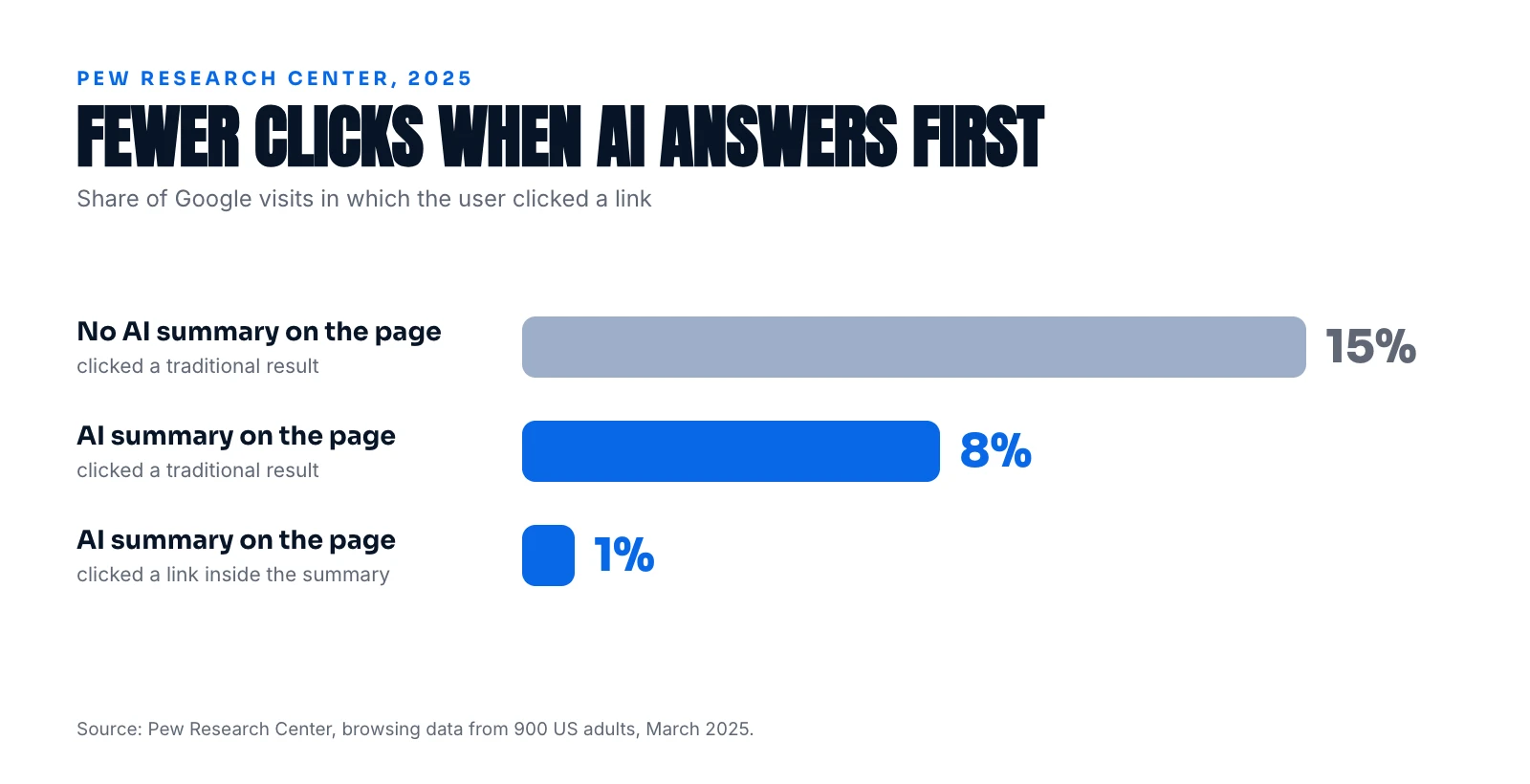
The study tracked the real browsing of 900 US adults during March 2025, so it reflects behaviour, not opinion. It changes what winning looks like. When fewer people click, being named inside the answer matters more than ranking fifth underneath it.
Why does first-hand experience matter more now?
Because a competent summary is now easy for anyone to produce, so it no longer sets a page apart. Google's own guidance asks whether content shows first-hand expertise and a depth of knowledge, and says that of all its quality signals, trust is the most important.
For a business, that means writing about what you have actually done: the client situation, the number you measured, the mistake you will not make twice. It is also why we never invent a statistic, a review or a result, on our pages or on yours.
How do you know whether AI engines are citing you?
Ask them, the same way your buyers do, and keep a record. List the 20 or 30 questions your customers ask before they buy, run them in ChatGPT, Perplexity, Gemini and Google each month, and note whether you are named, linked or missing.
It is a simple method, and an honest one. A rank tracker can tell you where a page sits in Google, but only the answers themselves show whether AI engines trust you. We report it the way we report everything else: written for humans, not dashboards.
What should AI SEO services actually change on your site?
A good AI SEO service changes four things: whether AI crawlers can reach your pages, whether each page answers a real question in its first two sentences, whether every claim carries a source, and whether your structured data matches what the page actually says. Google lists structured data that matches the visible text on the page among its own best practices for AI features.
In practice, that work looks like this:
Access. Robots.txt, firewall rules, page speed and indexing, checked for every AI crawler that matters to you.
Answers. One question per section, answered in the first two sentences, then explained.
Proof. Real numbers, linked sources and your own first-hand experience, never invented ones.
Signals. Schema that matches the visible page, and the same business details everywhere you are listed.
Measurement. A monthly log of the questions your buyers ask and whether AI engines name you.
None of this is a shortcut. Anyone promising you a guaranteed place in ChatGPT is guessing, in the same way anyone promising instant rankings is guessing.
If you would like to know whether ChatGPT, Perplexity and Google's AI Overviews can see your business today, we will check it with you and say plainly what we find. Start a conversation.